
Is 15 Minutes Enough for a Vet Consultation?
The 15-minute consultation slot is the default setting for most veterinary practices. It's baked into scheduling software, inherited from human general practice, and rarely questioned. But research suggests it's failing – nearly 50% of veterinary consultations exceed their scheduled duration, creating a cascade of delays, stressed teams, and clients who feel rushed.
The question isn't whether your practice can see more patients with shorter slots. It's whether you're actually capturing the value of each visit – or losing it to chaos.
Where the 15-minute slot came from
The quarter-hour appointment emerged from mid-20th century efficiency thinking, borrowed from human primary care. The logic is simple: a vet running 15-minute slots could theoretically see 32 patients in an 8-hour day. At 20 minutes, that drops to 24 – a 33% reduction in capacity.
On paper, the maths favours speed. In practice, it falls apart.
Studies of consultation lengths found that 49.8% of veterinary consultations are scheduled for 15 minutes, with another 39.4% at just 10 minutes. This high-volume approach treats every visit as identical – a vaccination, a vomiting dog, a geriatric cat with three chronic conditions – and allocates the same time to each.
The problem is that biological systems and client concerns don't fit into uniform boxes.
The overrun reality
When researchers actually timed consultations rather than looking at what was scheduled, they found systematic misalignment.
Median consultation length for a specific health problem was around 10 minutes – which sounds fine until you consider the distribution. The range extended from 7 minutes to over 60 minutes depending on case complexity. With half of all consultations exceeding their allocated time, the schedule isn't running efficiently – it's accumulating debt.
A 5-minute overrun at 9:00am pushes the 9:15 appointment to 9:20. If that case also runs long, the 9:30 slot doesn't start until 9:40. By mid-morning, you're operating with a 20-30 minute lag. The waiting room fills. The receptionist fields complaints. The vet skips lunch to catch up on notes.
This isn't a failure of time management. It's a structural problem with the scheduling model itself.
What the 15-minute slot doesn't account for
The allocated time typically covers only the client-facing portion of the visit. It rarely includes:
Record keeping. Writing SOAP notes takes time – and they're legally required.
Diagnostics. Interpreting cytology, reviewing radiographs, running in-house bloods.
Prescribing. Calculating dosages, checking interactions, preparing medications.
Communication. Follow-up calls to owners, referral letters to specialists.
When 100% of a vet's day is booked with back-to-back consultations, this work gets compressed into non-existent gaps or pushed to the end of the shift. The "time debt" accumulates until someone stays two hours late finishing notes.
Research on veterinary efficiency suggests that only practices with high support ratios – multiple nurses and exam rooms per vet – can sustainably manage 15-minute slots. For the average practice, the model guarantees overruns.
The hidden cost of rushing
Practice owners often fear that longer appointments mean less revenue. Fewer patients, fewer invoices. But the data suggests the opposite.
When a vet is running behind, the focus shifts from comprehensive care to catching up. This leads to what the industry calls "leakage":
Missed diagnostics. A vet running 20 minutes late is less likely to recommend cytology on an ear infection – they'll treat empirically to save time. That loses immediate revenue and risks treatment failure.
Missed charges. In the chaos of rushed turnovers, small items get forgotten – nail trims, medical waste fees, specific medications.
Reduced compliance. Owners who feel rushed are less likely to accept treatment plans. Time is a proxy for care; when clients feel processed, trust erodes.
The "efficiency" of seeing four patients an hour is negated if the average transaction value of those patients drops because everything is rushed. Revenue analysis shows that while patient visits have declined in recent years, revenue per visit has increased – suggesting the market is shifting toward value over volume.
The burnout connection
The operational problems of tight scheduling feed directly into the mental health crisis affecting the profession. Burnout is estimated to cost the veterinary industry $1-2 billion annually in lost productivity and turnover.
The mechanism is straightforward. Constant time pressure creates chronic stress. Wanting to provide thorough care but being forced to cut corners causes moral distress. Switching from a puppy vaccine to a euthanasia to a diabetic recheck every 15 minutes – with no buffer – prevents cognitive recovery.
By mid-afternoon, decision quality degrades. By the end of the week, exhaustion sets in. Over months and years, good vets leave the profession.
Practices that acknowledge this by scheduling buffer blocks or longer standard slots report higher vet satisfaction. And in a labour market where replacing a veterinarian can take 12-18 months, retention is a financial strategy, not just a wellbeing initiative.
What variable scheduling looks like
The alternative to fixed 15-minute slots is matching appointment length to visit type. This isn't complicated – it just requires abandoning the "one size fits all" mindset.
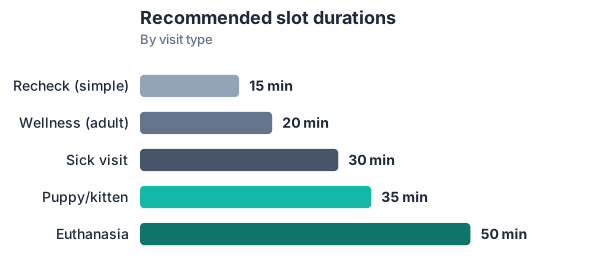
Wellness exams (adult): 20 minutes. Enough time for a thorough history, nose-to-tail exam, and vaccine discussion without rushing.
Puppy/kitten visits: 30-40 minutes. These are education-heavy appointments that set the trajectory for the pet's entire medical life. House training, socialisation, nutrition, parasite prevention, vaccination schedules – trying to compress this into 15 minutes guarantees the owner leaves with unanswered questions.
Sick visits: 30 minutes. A vomiting dog requires history, examination, discussion of diagnostics, sample collection, processing, results discussion, and treatment planning. This workflow physically cannot happen in 15 minutes without either admitting the patient or breaking the schedule.
Rechecks: 10-20 minutes. A simple post-op check might need 10 minutes. A complex diabetes recheck needs 20-30.
Euthanasia: 45-60 minutes. The medical procedure is quick, but the service is emotional support. Rushing end-of-life care is the single most damaging thing a practice can do to its reputation.
New clients: add 10 minutes. They arrive with no baseline trust, no records on file, and need rapport building. Scheduling them identically to established clients is an operational error.
The triage problem
Variable scheduling only works if the front desk can identify the right slot type during booking. This requires a shift from "when do you want to come in?" to "what's the reason for the visit?"
A simple decision tree helps:
- Is this a new pet? → Book the longer puppy/kitten slot
- Is the pet sick? → Book the 30-minute medical slot
- Is this a routine vaccine for an established patient? → Standard 20-minute slot
- Is the pet not eating, lethargic, or struggling to breathe? → Same-day urgent slot or emergency triage
Online booking complicates this. If clients self-select "exam" for a complex problem, the schedule breaks before the day begins. Modern booking tools can use logic trees – "Is the pet sick?" triggers a longer slot – but someone needs to configure them, and a receptionist should review online bookings each morning to catch mismatches.
Building buffer into the day
Even with well-matched slot lengths, some overruns are inevitable. A doorknob question ("Oh, by the way, he's been drinking a lot of water lately") can transform a routine vaccine into a diabetes workup.
The solution is scheduled buffer time – short blocks throughout the day that absorb delays. Three 10-minute catch-up slots (mid-morning, after lunch, mid-afternoon) prevent the cascade effect where one overrun derails the entire afternoon.
If the buffers aren't needed, they become time for callbacks, notes, or a mental reset. If they are needed, they save the schedule.
What to track
To know whether changes are working, monitor:
Actual vs scheduled time. Pull a report from your practice management system comparing booked appointment length to actual consultation duration. This tells you where your estimates are wrong.
Overrun frequency by visit type. Are sick visits consistently running long? Are puppy appointments the problem? Target your adjustments.
Average transaction value. If longer slots are capturing more diagnostics and treatments, ATV should increase even if raw patient numbers drop slightly.
Team satisfaction. Are vets finishing on time? Taking lunch? Leaving without a backlog of notes? These are leading indicators of sustainability.
The shift in mindset
The veterinary market is changing. Visit frequency is declining while revenue per visit increases. Clients paying premium prices expect premium service – not a 10-minute sprint.
The question for practice owners isn't "how many patients can we see?" but "how effectively can we treat the patients we see?" In an environment of tighter margins and staff shortages, the practice that runs smoothly will outperform the one that runs frantically.
The 15-minute slot was designed for a simpler era of veterinary medicine. It's not equipped for chronic disease management, first-time owners who need education, or the emotional complexity of modern pet ownership. The data says it's time to rethink the default.
If you're wrestling with scheduling chaos at your practice, we're building something that might help – sign up below to hear when it's ready.
Get notified when VetPlanner launches